ShopMy vs LTK: An Honest Comparison
The quick version: ShopMy has no follower minimum, lets you link nearly any product from any brand, and pays weekly. LTK has its own consumer shopping app that generates organic traffic but requires an application and follower threshold. Which one is better depends on where you are in your creator journey. Here’s the full breakdown.
For a long time, affiliate marketing for creators meant one of two things: sign up for multiple brands’ standalone programs or work until you have enough followers to apply to LTK.
ShopMy is genuinely changing how influencers, content and UGC creators think about monetization. If you’ve been googling “what is ShopMy,” “is ShopMy legit,” or wondering how it actually stacks up against LTK, here’s the full breakdown.
ShopMy vs LTK: Quick Comparison
| ShopMy | LTK | |
|---|---|---|
| Follower minimum | None | ~5,000 (with approval) |
| Cost to join | Free | Free |
| Product flexibility | Nearly any URL | Limited to LTK network brands |
| Own shopping app | No | Yes |
| Commission range | 10–30% | Varies by brand |
| Payout schedule | Weekly (PayPal or Stripe) | Monthly |
| Brand outreach | Direct messaging via Opportunities | Through LTK platform |
| Analytics | Real-time | Standard reporting |
So, What Is ShopMy?
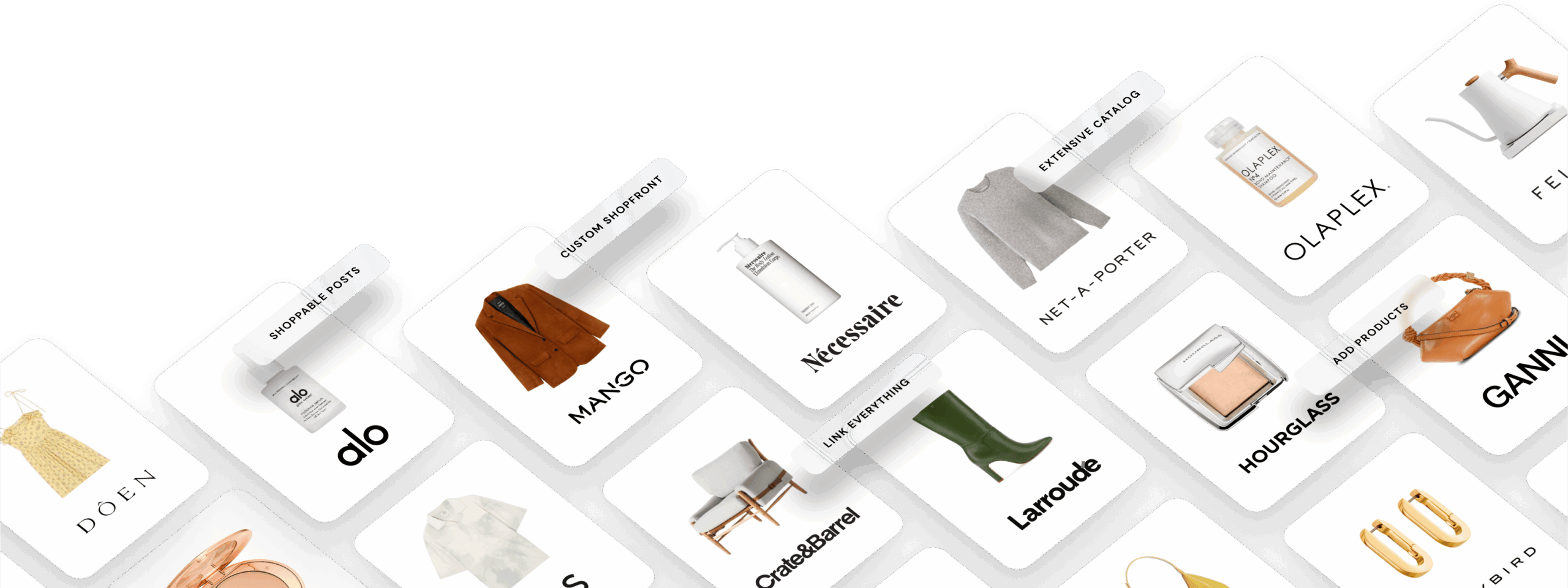
ShopMy (shopmy.us) is a creator monetization platform where you build your own digital storefront, populate it with products from a network of over 50,000 brand partners, and earn commission on every sale you drive.
(BTW, don’t let the .us throw you off. Creators from all over can join)
Think of ShopMy as a curated shop that lives at a shareable link, organized by shelves and categories, stocked with things you actually recommend.
Beyond the storefront itself, there’s a flexible affiliate linking tool, a brand partnerships feature called Opportunities, a mobile app for managing everything on the go, and a browser extension called SnapShop that lets you add products to your shop while you’re browsing.
It covers a lot of ground in one place
Is ShopMy Legit?
Yes. ShopMy is a legitimate company.
The influencer tool space has had its sketchy moments, so the skepticism makes sense. But ShopMy pays out every Friday through PayPal or Stripe, earnings are tracked in real-time, including not just from which brand but which products, and the brand network includes names most people will recognize across fashion, beauty, home and decor, health and wellness, food and drink, and accessories.
Commissions run between 10 and 30 percent on sales you drive. That range is clearly outlined on the platform and varies by brand, which is pretty standard across affiliate programs. The structure is transparent and the payout schedule is consistent, so there are no mystery timelines on when your money shows up.
How Does ShopMy Work
The platform is built around three main things:
Your digital storefront. You can customize a shop that reflects your aesthetic and content. Products live in organized shelves and collections. Shoppable posts and gift guides are options too, so it works across a lot of different content styles.
Affiliate links. You pick from the brand partner catalog, add products to your shop, and ShopMy automatically applies monetization through its brand and retailer affiliate programs. The links update automatically as well, which is more important than it sounds. Broken links sending your audience to dead pages are a real conversion killer, and this takes that problem mostly off your plate.
Brand partnerships. The Opportunities feature connects you directly with brands for paid collaborations, gifting, and custom discount codes. It’s designed to build ongoing relationships, not just one campaign and done.
Earnings are visible in real-time and paid weekly.
ShopMy vs LTK: What’s Actually Different
This is where I want to get specific, because the platforms are not the same product.
The Traffic Source
LTK has a consumer shopping app that generates its own organic traffic. Shoppers who don’t follow you can still find your content while browsing. ShopMy does not have that. Your traffic comes entirely from you, whether that’s Instagram, TikTok, a blog, or wherever your audience lives. That is the single biggest practical difference between the two platforms, and it matters most if you’re earlier in your growth and don’t yet have an established audience driving consistent clicks.
Follower Requirements
ShopMy has none. Zero.
LTK has historically required a minimum of around 5,000 followers and an approval process. If you’re earlier in your creator journey, ShopMy is the door that’s actually open to you right now.
Product Flexibility
This is a big one. ShopMy lets you create custom affiliate links for nearly any URL on the internet. LTK is largely limited to brands and retailers inside its own network. If your favourite independent or smaller brand isn’t an LTK partner, you’re out of luck. With ShopMy, that’s not the barrier it would be elsewhere.
Brand Access
ShopMy’s network includes over 47,000 commission-offering brands and more than 1,500 brand partners you can message directly inside the platform. That direct line to brands without going through an external pitch process is genuinely useful for building relationships without a manager or agency in the middle.
Storefront Layout
ShopMy’s shelf-and-category structure is organized in a way that feels intentional when someone is browsing your recommendations. LTK’s grid format is more Instagram-adjacent, which works well for image-heavy content but doesn’t offer the same level of navigation for a visitor looking for something specific.
Is ShopMy Free? What Does It Cost?
ShopMy is free to join and free to use as a creator. There is no subscription fee, no monthly cost, and no follower threshold to clear before you can access the platform. ShopMy earns revenue through its brand partnerships and affiliate network, not by charging creators. LTK is also free for creators.
ShopMy Numbers Are What Brands & Agencies Are Paying Attention To Now
This is the piece I think every creator needs to hear in 2026.
Karen Posner, an influencer marketing manager and UGC creator who works both the brand and creator sides of partnerships, laid it out clearly in a LinkedIn post recently:
“Reach and engagement were never the brag. They were the cope. Those were the only metrics we had, so those became the metrics we reported. But anyone who’s tried to defend a creator budget in a tight quarter knows ‘we got 2 million impressions’ lands a lot differently than ‘we drove $400K in new customer revenue.'”
She was writing about Katie Gohman, CMO of Olaplex, who shared publicly that her team now measures creator partnerships on nCPA (new customer cost per acquisition), search lift, and direct ROI, made possible by tools including ShopMy.
The shift Posner is describing is real. Brands are no longer briefing creators based on follower counts alone. They’re looking at performance data: who actually drives clicks, who converts, who moves product. And ShopMy gives you that data in real time.
Posner put it plainly for the creator side:
“The creators who can talk performance in their own decks are about to out-earn the ones still selling reach.”
If you’re using ShopMy, you have actual numbers to bring into brand conversations. Click-through rates, sales driven, affiliate performance over time. That’s not a small advantage.
Why Individual Affiliate Program Links Limit Your Earning Potential
Sure, you could apply to individual brand affiliate programs, but that only works until it doesn’t. The commission rates and terms are entirely up to that one brand, and if they change the program, pause it, or your audience just isn’t buying from them that month, your earnings take the hit. There’s no flexibility built in.
ShopMy consolidates everything. One dashboard instead of five. One payout schedule instead of several. One place where your audience can browse your recommendations instead of a scattered collection of individual links. And if one brand in your catalog goes quiet, you have thousands of others to pull from.
There’s also a presentation factor that matters more than people give it credit for. A well-organized storefront reads differently than a loose collection of affiliate URLs. It signals that you take your recommendations seriously, which tends to build trust with your audience faster.
Which Should You Choose: ShopMy or LTK?
Use ShopMy if:
Use LTK if:
Use both if you can manage two platforms and want to maximize reach across both audiences
How to Create a ShopMy Account
Head to shopmy.us and apply as a creator. You’ll connect your social media profiles as part of the review process. There’s no follower minimum, but ShopMy does look at your content to verify that you’re an active creator before approving access.
Once you’re in, you customize your storefront, install the SnapShop browser extension for easier product adding while you browse, and start building out your shelves.
If you’re already running affiliate links through individual brand programs or LTK, it’s worth looking at how ShopMy fits into what you’re doing. The setup doesn’t take long, and having your recommendations in one organized, monetized place is a pretty solid upgrade from where most creators start.