FIFA Painted Over a Dallas Mural for the World Cup Without the Artist’s Permission
Scrolling Instagram yesterday, I came across a post that made me insta-sad and tweeted it out.
This led to continued sharing of a lot of big feelings.
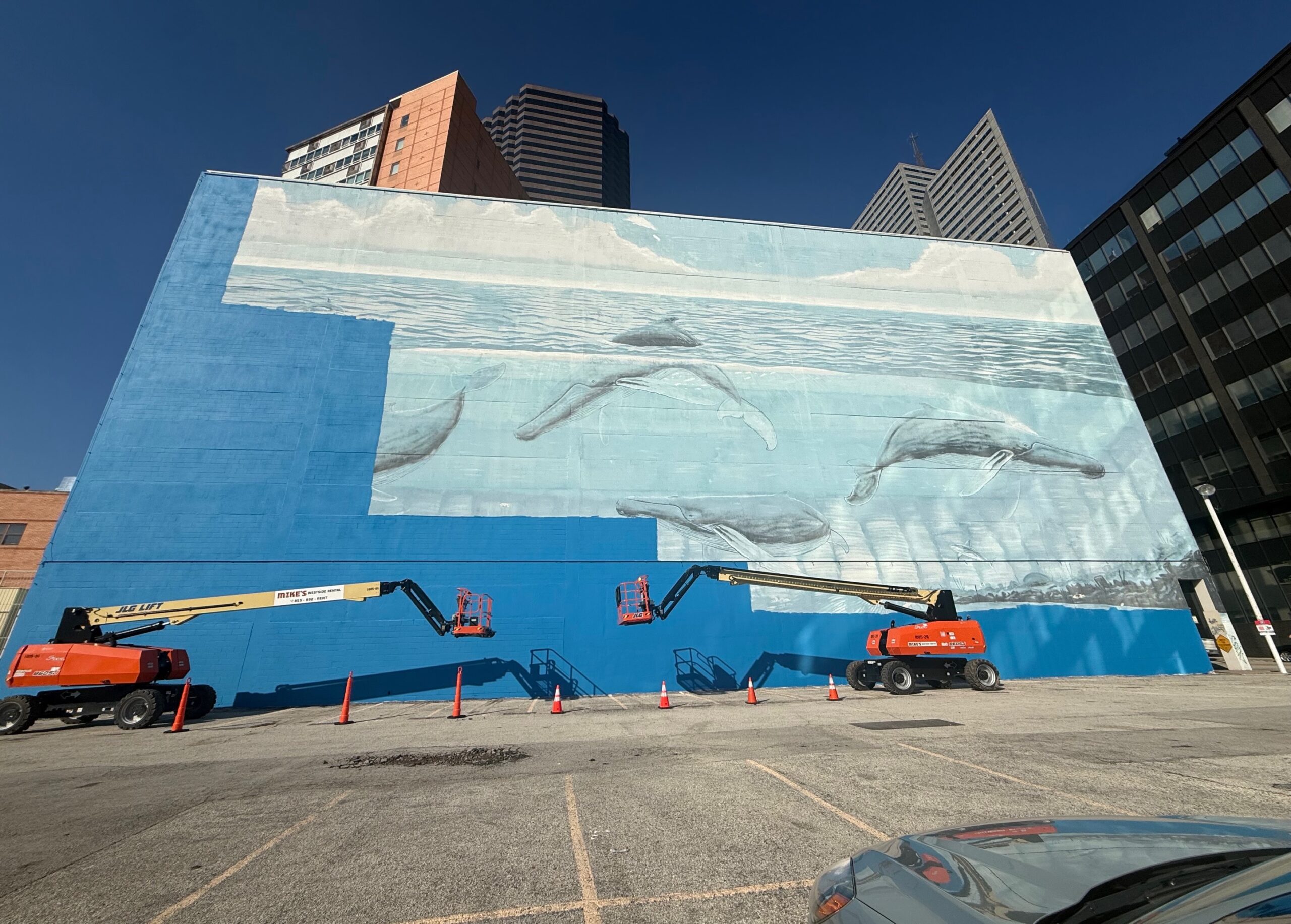
In Downtown Dallas, there used to be a mural. Not just any mural, Wyland’s Ocean Life, known officially as Whaling Wall 82. Eight stories tall, one hundred and sixty-four feet wide, it featured humpback whales moving through deep blue water across the side of a building, painted in 1999 as a gift to the city and a reminder that even landlocked cities and towns downstream have a responsibility to the ocean.
This week, a crew painted over it.
FIFA painted over a beautiful, long-standing mural in Downtown Dallas.
It was gifted to the city by marine life artist & conservationist Wyland in the 90s as a reminder to protect our beloved oceans.
What an unnecessary loss, especially given no matches are actually in Dallas. pic.twitter.com/yQ7f6gJN10
— Casey Telford // (@CaseyToGo) May 16, 2026
FIFA commissioned new World Cup artwork to go up in its place, with the building owner giving the go-ahead. And Wyland, the artist who gifted it to the people of Dallas, says nobody told him it was happening. He found out when someone sent him a photo of the paint-over already in progress.
“That’s a lie with a capital L,” is how he described FIFA’s claim that he’d been contacted. He’s now looking at legal action under the Visual Artists Rights Act, which protects artists from the destruction or alteration of their work even after it’s been gifted to a city. In an interview with FOX 4, he estimated the mural’s value at around $15 million, and said any settlement would go to communities, conservation efforts, and school art programs — not his pocket.
The response from FIFA was what you’d expect from a powewrful federation, a statement about how the replacement piece would “capture the current historical moment and reflect the energy, unity, and global spirit surrounding the World Cup 2026 this summer.” Which is a very interesting sentence to write when you’ve just covered six beautiful humpback whales in blue paint.
The Conversation That Followed
What I didn’t expect was how much people had to say, at least via my own post. I know how many discussions were taking place elsewhere, especially via other news sites and the social accounts of Hyland himself. The shared thoughts also went in so many different directions. One of the first quote-tweets I saw was one of the most felt.
OH MY GOD, WHAT.
I grew up with this mural. https://t.co/j1mM7oNRsK
— Karen Attiah (@KarenAttiah) May 17, 2026
Karen Attiah, a former Washington Post columnist who grew up in Dallas, wrote: “OH MY GOD, WHAT. I grew up with this mural.” The latter six words bringing a feeling most people can place instantly, the grief of something being gone that you assumed would always just be there.
Other strong messages followed.
We kill them in their habitat and then kill artists trying to save their beauty.
I can’t. https://t.co/ch2x2dXgp6— 𝓚𝓪𝓽𝓲𝓮 𝓗𝓮𝓷𝓷𝓮𝓼𝓼𝓮𝔂 (@kay_hennessey) May 17, 2026
A point I thought was worth highlighting: this whole story is also about what happens to host cities and the communities around them when a massive sporting event comes to town.
The spotlight isn’t always flattering, and the footprint isn’t always welcome.
Isn’t the goal to spotlight cool things in the host country? Not paint over them?? What a loss for Dallas 😕 https://t.co/3gB7JmnXvS
— Emmy (@emmybenney) May 17, 2026
Then there’s the detail that made me do a full double-take in the first place. Because technically, the “FIFA World Cup 26 Dallas” games aren’t in Dallas.
Disgusting.. this mural is 30 miles away from where the game is going to be played and 15 miles from downtown Dallas https://t.co/R8KXUX4s6x
— cowtown5 (@texasoccer5) May 17, 2026
AT&T Stadium, where the nine Dallas-area matches are being held, including a semifinal on July 14, is in Arlington. A completely separate city, roughly 20 minutes from Downtown Dallas, located between Dallas and Fort Worth.
FIFA is temporarily renaming it “Dallas Stadium” for the tournament. So a mural was painted over in a city that isn’t technically hosting any matches, to promote a tournament that will play its games somewhere else, and the ad for the tournament everyone already knows about is going up less than 30 days to the day said tournament kicks off.
I don’t know if that makes it worse or just weirder, but it’s something.
Meanwhile, in another Host Region, the Province of BC
Sad to see.
The Wyland Whaling Walls are well known in BC. https://t.co/5VLNK8iaVL
— Asa Rehman (@AsaRehman) May 16, 2026
Wyland has Whaling Walls across North America and beyond. British Columbia, the province that’s home to Vancouver, another FIFA 2026 host city, has one too. In Victoria.
They painted over a Wyland Whaling Wall? Who would do such a thing?
Here's Victoria, BC pic.twitter.com/BDUeA5Kp47— Amor De Cosmos (@SlantingFlying) May 17, 2026
There’s something about that worth sitting with. The Whaling Walls weren’t random. They were placed with intention, in cities where Wyland believed the message mattered.
Vancouver and its surrounding province are on the coast. The ocean is not abstract there. And yet here we are, one month before the tournament kicks off, talking about what FIFA is willing to erase in the name of “energy, unity, and global spirit.”
Organizers said part of the original artwork would remain intact
Proj by North Texas FWC Organizing Committee & Slate Asset Management (owns building)
Wyland said the mural is protected under the federal Visual Artists Rights Act and said he plans to pursue legal action. pic.twitter.com/6yigYKYp7c
— Astrid Vasquez (@AstridEquis) May 17, 2026
The Unexpected Travel Thread
Not everything that came out of this conversation was heavy. Somewhere in the middle of all of it, people started sharing the Wyland walls they know, and it turned into something closer to a travel wish list than a pile-on.
I go out of my way to see Wyland murals when traveling. This is so disappointing to see!
— 🦢🦢🦢 (@LynnDelacour) May 17, 2026
Cleveland has one.
Cleveland mural representing!!! I’d be devastated if we lost this! pic.twitter.com/FyWMYXha7q
— alex przyrowski (@PrzyAlexandra) May 17, 2026
Long Beach has one too.
Horrible. We love our Planet Ocean mural by Wyland in Long Beach, CA pic.twitter.com/13UidUZ4v4
— Feeling Blue 💙 (@Lindatini) May 17, 2026
If you want to find a Wyland wall near you, or near wherever you’re already planning to travel this World Cup summer, the Wyland Foundation has a full list.
I spent more time on it than I expected to. There’s something about knowing a piece of public art that was meant to make you think about the ocean is waiting for you in a city you might otherwise walk straight through.
Where Things Stand Now
As of this writing, the larger face of the Whaling Wall is covered. A smaller section on an adjacent side of the building is still visible. FIFA has said a portion of the original work will be “preserved as a tribute to its lasting impact on the city,” which is an interesting thing to promise after covering most of it for a temporary ad.
Wyland says he’s going after them hard. He’s asked Dallas to stay with him. And in a line that I’ve been thinking about since I first read it, he said: “If they can get away with it, then all the public art in Dallas and all the public art in America is at risk.”
That feels like the part that matters most when the World Cup is over and the city highlights people came to discover or expect are just… gone.
Feature Image Credit: Wyland & Wyland Foundation